
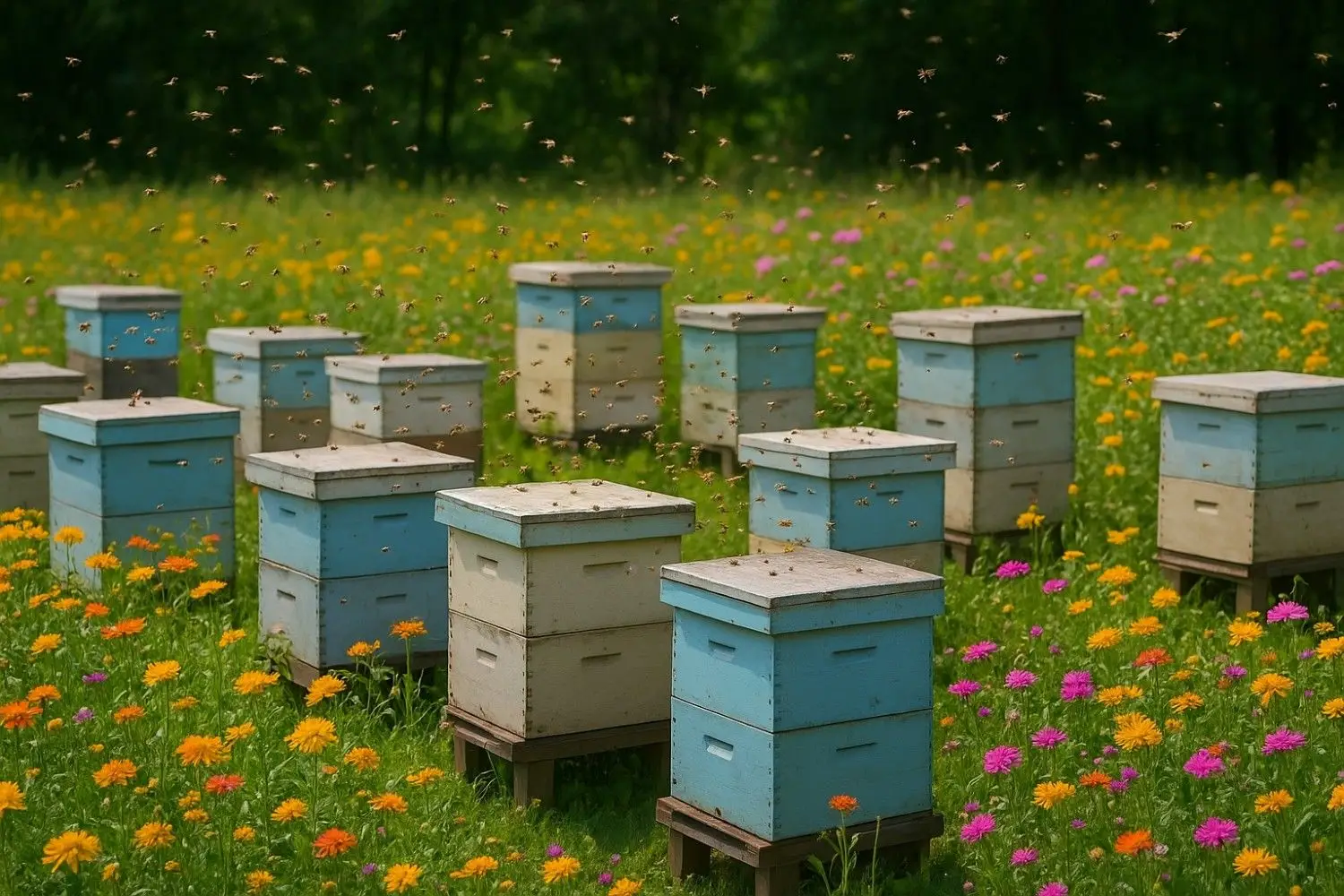
What is Beekeeping?
Beekeeping, or apiculture, is the management of honeybee colonies for honey, wax, propolis, royal jelly, pollen, and pollination services. It is both an ancient art and a modern science. In India, where diverse flowering plants bloom across seasons, beekeeping offers livelihood, nutrition, and ecological benefits. With rising demand for natural honey and bee products, apiculture is one of the fastest-growing agri-enterprises.

Importance of Beekeeping
- Nutrition: Honey is a natural sweetener enriched with enzymes, antioxidants, and vitamins.
- Income: A low-cost, high-return rural enterprise.
- Pollination: Bees increase yields of mustard, sunflower, apple, cucurbits, and legumes by 15–200%.
- Ecology: Supports biodiversity and sustainable farming.
Honeybee Species
Several species of bees are suitable for apiculture:
- Rock Bee (Apis dorsata)
- Wild, aggressive species building large combs on cliffs/trees.
- Yields 30–80 kg of honey/colony/year.
- Little Bee (Apis florea)
- Small, less aggressive, nests in bushes.
- Produces 0.5–1 kg of honey/year/colony.
- Indian Hive Bee (Apis cerana indica)
- Indigenous domesticated species.
- Yields 6–10 kg of honey/year/colony.
- European/Italian Bee (Apis mellifera)
- Imported, highly productive.
- Yields 25–40 kg of honey/year/colony.
- Stingless Bees (Trigona spp.)
- Small colonies, medicinal honey.
- Useful in cross-pollination of fruit and spice crops.
Floral Sources for Bees
Bees thrive only where nectar and pollen sources are abundant. Important bee flora in India includes:
- Trees: Neem (Azadirachta indica), Jamun (Syzygium cumini), Gulmohar (Delonix regia), Eucalyptus (Eucalyptus globulus).
- Field crops: Mustard (Brassica juncea), Sunflower (Helianthus annuus), Cotton (Gossypium hirsutum), Sesame (Sesamum indicum).
- Orchards: Litchi (Litchi chinensis), Mango (Mangifera indica), Apple (Malus domestica), Citrus (Citrus limon).
- Spices & Vegetables: Coriander (Coriandrum sativum), Cucumber (Cucumis sativus), Pumpkin (Cucurbita moschata).
Migratory beekeeping ensures hives follow these flowering seasons, maximising honey flow.
Materials and Equipment Required
1. Beehives
- Traditional hives: clay pots, wall niches, wooden logs.
- Modern movable-frame hives: Langstroth hive, Newton hive, ISI-approved types.
2. Protective Equipment
- Bee suit, gloves, veil, gumboots.
3. Tools
- Hive tool – to open hives, scrape propolis.
- Smoker – to calm bees with smoke.
- Bee brush – gently removes bees from combs.
- Queen excluder – a wire grid preventing queen entry into honey supers.
4. Honey Extraction Equipment
- Honey extractor (centrifugal).
- Uncapping knife.
- Filters/strainers.
5. Feeding Equipment
- Sugar syrup feeders during dearth periods.
Step-by-Step Beekeeping Methods
1. Selecting a Site
- Rich floral diversity, away from pollution and pesticides.
- Shade in summer, wind protection, and nearby water.
2. Establishing Colonies
- Introduce nucleus colonies with 3–5 comb frames and a fertile queen.
- Place hives in the evening to reduce disturbance.
3. Feeding Bees
- Sugar syrup (1:1) during nectar scarcity.
- Protein supplements (soy flour, pollen patties) for brood rearing.
4. Seasonal Management
- Spring: Add supers for honey flow.
- Summer: Ensure shade, water, and ventilation.
- Monsoon: Avoid dampness and fungal growth.
- Winter: Reduce hive entrance, insulate colonies.
5. Swarm Management
- Clip queen’s wings, divide colonies, or requeen to prevent swarming.
6. Pest & Disease Management
- Varroa mite (Varroa destructor): Control with formic acid, thymol, Apistan strips.
- Wax moth (Galleria mellonella): Store combs securely, fumigate with sulfur.
- Foulbrood (bacterial): Burn infected combs, use antibiotics cautiously.
- Ants/Wasps: Place hives on stands with oil-coated legs.
Migratory Beekeeping in India
To follow flowering crops and trees, hives are shifted seasonally:
- North India: Mustard (Brassica juncea), Eucalyptus, Litchi.
- Central India: Sunflower, Safflower (Carthamus tinctorius).
- South India: Rubber (Hevea brasiliensis), Coconut (Cocos nucifera).
- Himalayan regions: Apple, Cherry (Prunus avium), Plum (Prunus domestica).
This increases honey yield and provides essential pollination services.
Care and Management of Colonies
- Inspection: Every 7–10 days to check queen activity, brood pattern, and honey stores.
- Water: Provide shallow water containers with floating sticks.
- Record keeping: Colony strength, diseases, honey yield, queen age.
- Colony unification: Weak colonies merged with strong ones using the newspaper method.
- Queen rearing: Replace weak queens with prolific young queens.
Harvesting Honey

Signs of Harvest Maturity
- Honey cells are ¾th capped with wax.
Steps in Harvesting
- Smoke the hive entrance lightly.
- Remove frames from super chambers.
- Brush off bees carefully.
- Uncap wax layers with a knife.
- Spin frames in a honey extractor.
- Filter honey through a sieve/cloth.
- Store in airtight containers at <20% moisture.
Precautions
- Avoid harvesting brood combs.
- Prevent contamination with water/dust.
- Harvest during morning/evening when bees are less active.
Other Hive Products
- Beeswax: From comb cappings; used in cosmetics, candles, and polishes.
- Propolis: Resin with antimicrobial properties; used in herbal medicine.
- Royal Jelly: Nutritive secretion fed to queen larvae; marketed as a health tonic.
- Pollen: Rich in proteins and amino acids; a dietary supplement.
- Bee Venom: Used in apitherapy for arthritis and neural disorders.
Challenges in Beekeeping
- Pesticide poisoning from modern agriculture.
- Deforestation and habitat loss are reducing forage.
- Climate change is altering flowering times.
- Diseases and pests (Varroa, foulbrood).
- Low awareness among farmers about pollination benefits.
Sustainable Beekeeping Practices
- Promote organic farming and reduce chemical pesticide use.
- Train farmers in scientific apiculture methods.
- Encourage women’s groups and youth cooperatives in beekeeping.
- Integrate beekeeping with agroforestry and multi-crop systems.
Conclusion
Beekeeping is a sustainable enterprise linking agriculture, environment, and rural development. With scientific management of colonies, proper materials, care, and harvesting, apiculture can provide honey, wax, and medicinal products while boosting crop productivity through pollination.
India, with its vast floral diversity and climate, is poised to be a global leader in honey and bee-based products. Beekeeping is not just about honey — it is about biodiversity conservation, farmer income, and ecological balance.
Beekeeping truly offers the sweet path to sustainability.
Connect with us
We truly value your interest and look forward to connecting with you. Whether you have questions, need tailored solutions, or wish to explore collaboration, we are here to help. Reach out today — our team is ready to provide expert guidance and meaningful support. Wishing you a bountiful beekeeping. For further assistance, email us. Please feel free to reach out to us @Agrigo24/7
Reference
https://www.researchgate.net/publication/354461838_BEEKEEPING
https://www.researchgate.net/publication/313692521_Beekeeping_in_India
Leave a Reply