
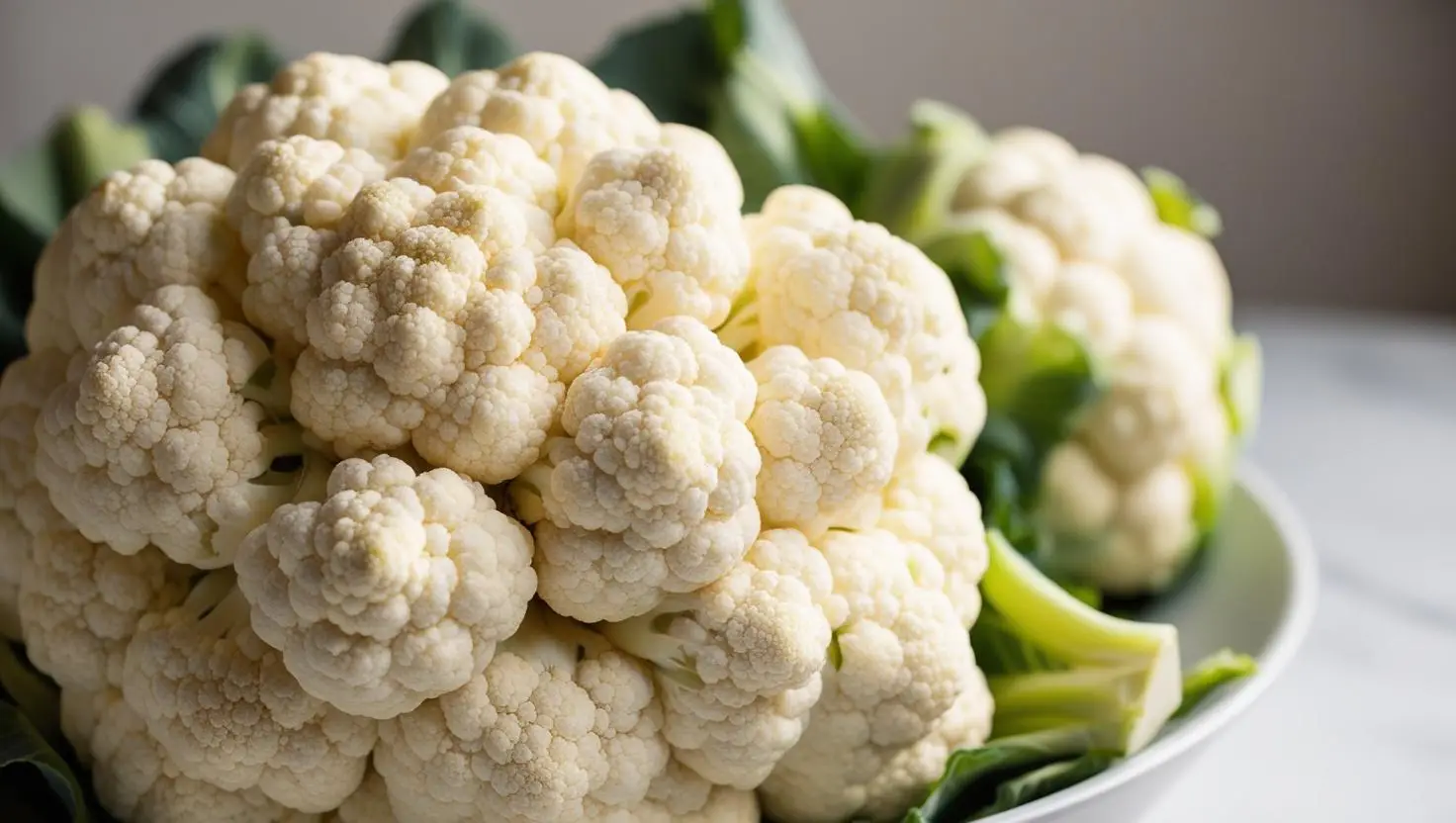
Cauliflower (Brassica oleracea var. botrytis) is a crucial vegetable crop in India, belonging to the Cruciferae family. It holds significant economic and nutritional value. This guide provides an in-depth look at cauliflower cultivation for Indian farmers, covering everything from its origin to harvesting.


Introduction to Cauliflower
Cauliflower is believed to have originated from wild cabbage known as ‘Cole warts’ through mutation, human selection, and adoption. Introduced to India by Dr Jemson at Saharanpur in 1822, cauliflower has since adapted to Indian conditions, resulting in the development of tropical varieties resistant to high temperatures and rainfall. Today, India is the largest producer of cauliflower in the world, with major cultivation regions spread across the country.
Nutritive Value
Per 100g of edible portion
| Energy (kcal) | 27 |
| Moisture (%) | 91 |
| Protein (g) | 2.7 |
| Fat (g) | 0.2 |
| Ascorbic Acid (mg) | 78 |
| Vitamin A (IU) | 60 |
| Thiamine (mg) | 0.11 |
| Riboflavin (mg) | 0.1 |
| Niacin (mg) | 0.7 |
| Calcium (mg) | 25 |
| Phosphorus (mg) | 56 |
| Iron (mg) | 1.1 |
| Carbohydrates (g) | 5.2 |
Climate and Soil Requirements
Climate
Cauliflower thrives in a cool and moist climate, making it a temperate crop that can adapt to tropical and subtropical conditions. The optimal temperature for cauliflower growth ranges between 15°C and 20°C. Extreme temperatures can adversely affect curd formation and quality. High temperatures can cause the curds to become loose and granular, while frost can damage young plants and curds.
Soil
Cauliflower grows best in well-drained, fertile loamy soils with a pH range of 6.0 to 7.5. It requires soil rich in organic matter to ensure good curd development. Heavy clay soils or poorly drained soils can lead to root diseases and poor plant growth. Adding compost or well-rotted manure can improve soil structure and fertility, providing essential nutrients for the crop.
Varieties of Cauliflower
India has developed various cauliflower varieties to suit different climatic conditions and growing seasons. These varieties are classified based on their maturity periods:
Early Varieties
- Pusa Early Synthetic: Suitable for early cultivation in northern and southern states. The average yield is 117 q/ha.
- Early Kunwari: Suitable for Punjab, Haryana, Himachal Pradesh, and Delhi. Harvesting from mid-September to mid-October.
Mid-Early Varieties
- Pusa Deepali: Ideal for sowing from May end to early June, maturing in October.
- Improved Japanese: Recommended for sowing in north Indian plains from July end to early August. Harvesting from late November to mid-December.
Mid-Late Varieties
- Pusa Shubra: Suitable for rainy season cultivation. Curds do not fade even under delayed harvesting and storage.
- Punjab Giant-35: Suitable for late-season cultivation. Curds are compact and snow-white.
Late Varieties
- Pusa Snowball-1: Released for growing throughout the country where Snowball types are preferred.
- Pusa Him Jyoti: Suitable for transplanting in hill tracts in May and August.
Cultivation Practices
Nursery Preparation
- Seed Selection: Use certified seeds of recommended varieties.
- Seed Treatment: Treat seeds with fungicides like Captan or Thiram at the rate of 2 g/kg of seeds to prevent seed-borne diseases.
- Sowing: Sow seeds in raised nursery beds or seed trays. Maintain a seed rate of 500-600 g per hectare.
- Irrigation: Keep the nursery bed moist, but avoid waterlogging.
Field Preparation
- Land Preparation: Plough the land thoroughly and incorporate well-decomposed farmyard manure at the rate of 20-25 tonnes per hectare.
- Layout: Prepare raised beds or ridges and furrows depending on soil type and irrigation method.
Transplanting
- Timing: Transplant seedlings when they are 4-5 weeks old with 4-5 true leaves.
- Spacing: Maintain a spacing of 45-60 cm between rows and 45-60 cm between plants.
- Planting Depth: Plant seedlings at the same depth as they were in the nursery to avoid burying the growing point.
Irrigation
Cauliflower requires regular and adequate irrigation to maintain soil moisture. The frequency and amount of irrigation depend on the soil type, climatic conditions, and growth stage of the crop. Drip irrigation is recommended as it ensures uniform moisture distribution and minimizes water wastage. Overhead irrigation should be avoided to prevent waterlogging and reduce the risk of diseases.
Fertilization
- Basal Application: Apply 50 kg of nitrogen, 75 kg of phosphorus, and 50 kg of potassium per hectare at the time of transplanting.
- Top Dressing: Apply 50 kg of nitrogen per hectare in two split doses, at 30 and 45 days after transplanting. Additionally, micronutrients like boron and molybdenum can be supplemented through foliar sprays to enhance curd quality and prevent disorders such as hollow stem and browning.
Weed Management
- Manual Weeding: Hand weeding at 20 and 40 days after transplanting.
- Herbicides: Use pre-emergence herbicides like Pendimethalin at the rate of 1-1.5 kg/ha to control weeds effectively.
Pest and Disease Management
- Aphids: Spray systemic insecticides like Imidacloprid or Dimethoate. Regular monitoring and early intervention are crucial to prevent infestations.
- Diamondback Moth: Use biological control agents like Trichogramma or spray Bacillus thuringiensis. Integrated Pest Management (IPM) practices can also be employed, including pheromone traps and neem-based bio-pesticides.
- Black Rot: Treat seeds with hot water at 50°C for 30 minutes before sowing. Crop rotation and avoiding overhead irrigation can help reduce the incidence of black rot.
Harvesting and Post-Harvest Management
Harvesting
Cauliflower curds are ready for harvesting when they are firm, compact, and have attained the desired size. Over-mature curds may become loose and rice-y. Harvest the curds by cutting them with a sharp knife, leaving a few leaves to protect the curd during handling.
Post-Harvest Management
- Sorting and Grading: Remove damaged and diseased curds. Grade the curds based on size and quality.
- Storage: Store cauliflower curds at 0°C with 90-95% relative humidity to maintain freshness for up to 2-3 weeks.
- Packaging: Pack cauliflower curds in perforated plastic bags or cartons for transportation. Proper packaging minimizes physical damage and extends shelf life.
Economic Importance of Cauliflower
Cauliflower cultivation provides substantial economic benefits to farmers in India. It is a high-value crop with a consistent market demand. The profitability of cauliflower farming can be maximized by adopting best practices in cultivation, post-harvest handling, and marketing.
Market Demand and Pricing
Cauliflower is a staple vegetable in Indian cuisine, leading to a steady demand throughout the year. Prices fluctuate based on the season, with higher prices observed during off-season periods. Farmers can take advantage of these price variations by choosing appropriate varieties and planting schedules.
Value Addition and Processing
Value addition through processing can further enhance the profitability of cauliflower cultivation. Products such as frozen cauliflower florets, pickles, and dehydrated cauliflower have a growing market both domestically and internationally. Setting up small-scale processing units can provide additional income streams for farmers.
Challenges in Cauliflower Cultivation
Climate Change
Climate change poses a significant challenge to cauliflower cultivation. Erratic weather patterns, increased incidence of pests and diseases, and extreme temperatures can affect crop yields. Adopting climate-resilient varieties and sustainable farming practices can mitigate these impacts.
Soil Health
Continuous cropping without adequate soil management can lead to soil degradation. Practices such as crop rotation, green manuring, and the use of organic fertilizers can improve soil health and sustain productivity.
Water Management
Efficient water management is critical for cauliflower cultivation, especially in regions with limited water resources. Techniques such as drip irrigation, rainwater harvesting, and the use of mulches can optimize water use and reduce dependency on external water sources. It is advisable to provide 1 to 2 inches of water per week.
Access to Quality Inputs
Access to high-quality seeds, fertilizers, and pesticides is essential for successful cauliflower cultivation. Establishing strong supply chains and ensuring the availability of certified inputs can support farmers in achieving better yields.
Conclusion
Cauliflower cultivation in India has witnessed significant advancements, making it a profitable venture for farmers. By following the recommended cultivation practices, farmers can achieve high yields and quality produce. The choice of appropriate varieties, timely sowing, proper irrigation, and effective pest and disease management are crucial for successful cauliflower cultivation.
Key Takeaways
- Optimal Climate: Cauliflower thrives in cool and moist climates with temperatures ranging between 15°C and 20°C.
- Soil Requirements: Well-drained, fertile loamy soils with a pH of 6.0 to 7.5 are ideal for cauliflower cultivation.
- Variety Selection: Choose varieties based on the growing season and climatic conditions.
- Nursery Management: Proper seed treatment, sowing, and irrigation are essential for healthy seedling growth.
- Field Preparation: Incorporate organic matter and prepare raised beds or ridges and furrows for planting.
- Irrigation and Fertilization: Maintain adequate soil moisture and follow recommended fertilization schedules for optimal growth.
- Weed and Pest Management: Employ manual weeding, use of herbicides, and integrated pest management practices to control weeds and pests.
- Harvesting and Post-Harvest: Harvest curds at the right maturity stage and follow proper post-harvest handling to maintain quality.
- Economic Benefits: Cauliflower offers significant economic returns through fresh market sales and value-added products.
- Sustainable Practices: Embrace sustainable farming practices to address challenges like climate change and soil health.
By adhering to these guidelines, Indian farmers can maximize their cauliflower production, ensuring both high yields and quality produce, ultimately leading to better market returns and improved livelihoods.
Leave a Reply