
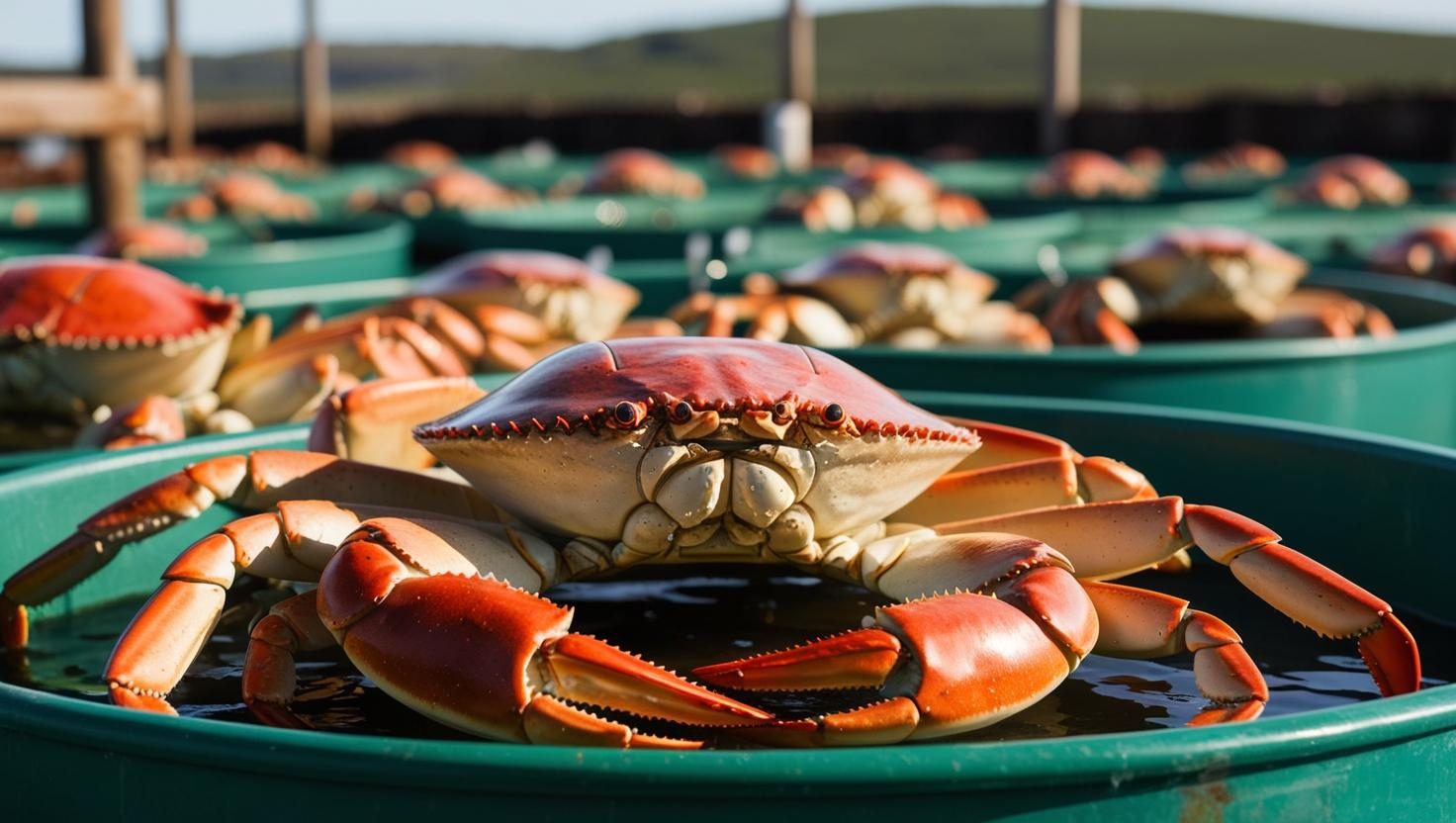
Crab Farming: How to Start a Profitable Business
Crab farming is emerging as one of the most promising aquaculture ventures for small-scale entrepreneurs. With increasing global demand for seafood and a rising preference for crabs in various cuisines, the industry offers significant profit potential. Mud crab (Scylla spp.) farming, in particular, is gaining popularity due to its high market value, fast growth rate, and adaptability to different environments.
This article explores the various aspects of pond-based crab farming, including its benefits, methods, market potential, and sustainability, making it an attractive option for aspiring entrepreneurs.
Why Choose Pond-Based Crab Farming?
Due to High Market Demand
Crabs, especially mud crabs, are in high demand in local and international markets. The increasing popularity of seafood in Asian and Western cuisines contributes to this rising demand.
It Needs Low Investment and High Returns
Compared to other aquaculture ventures, mud crab farming in ponds requires relatively low initial investment and offers quick returns due to short cultivation cycles.
It is Highly Sustainable and Eco-Friendly
Crab farming in ponds can be integrated with mangrove conservation efforts, promoting ecological balance and biodiversity.
Crabs are Resilience to Diseases
Mud crabs have shown significant resistance to diseases that commonly affect shrimp farming. This makes pond-based crab farming a lower-risk option for small-scale farmers.
Methods of Pond-Based Crab Farming
There are several pond-based methods that cater to different budgets and space availability. Some of the most popular methods include:
Traditional Pond Culture
Requires a well-prepared pond with proper water salinity and aeration.
Ideal for large-scale commercial farming.
Stocking density: 0.5–3 crabs/m², with survival rates up to 67%.
Feed includes trash fish, mollusks, and formulated diets.
Crab Fattening in Ponds
Short-term farming (30–45 days) for enhancing meat quality.
High stocking density is possible due to confined space.
Suitable for farmers looking for quick returns.
Semi-Intensive Pond Culture
Combines natural feeding with supplementary feeding.
Provides a balance between cost efficiency and productivity.
Requires periodic pond maintenance and water quality monitoring.
Essential Factors for Successful Pond-Based Crab Farming
Pond Preparation
Construct ponds with proper drainage and water exchange systems.
Maintain pond depth of 1–1.5 meters to ensure optimal crab growth.
Install protective barriers to prevent crab escape.
Water Quality Management
Maintain dissolved oxygen levels >5 mg/L.
Regular monitoring of pH, salinity, and ammonia levels.
Use of biosecurity measures to prevent disease outbreaks.
Feeding and Nutrition
Crabs require a protein-rich diet (fishmeal, shrimp waste, and mollusks).
Supplemental feeding with formulated feeds enhances growth.
Feed consumption should be monitored to avoid wastage.
Harvesting and Marketing
Crabs should be harvested at peak maturity for the best market price.
Female “egg crabs” fetch premium prices.
Market access through direct sales, export, or online seafood marketplaces.
REPRODUCTIVE BIOLOGY
Sexual dimorphism
Male
- The abdominal flap which is folded firmly against the ventral side of the cephalothorax is slender and triangular.
- Appendages are present only on the first and second abdominal segments and are modified to copulatory organs.
- Claws are comparatively large.
Female
- The abdominal flap folded against the ventral side of the body is broad and semicircular in berried females.
- Four pairs of abdominal appendages present from the 2nd-5th segment and are used for carrying eggs
- Claws are smaller.
Size at first sexual maturity
For the species Scylla tranquebarica, the size of the first sexual maturity is 120mm (carapace width). 83mm (carapace width) for (carapace width) for Scylla serrata serrata. The early maturing ovary is bright orange whereas in mature ready to spawn female is deep yellow.
Mating Behavior
Premating embrace, hard shell male climbing over the hard shell female and holding her by his cheliped and first two pairs of walking legs. The molt female is then left by the male helps the female in casting off the old cuticle. It lasts for 2-3 days.
Actual copulation starts, this lasts for 6-8 hours, and the male deposits spermatophores in the seminal receptacle of the female.
Separation of both adults happens.
Spawning
Releasing of ova by females and it gets fertilized by the sperm stored in the spermatophore. Attachment of fertilized eggs to ovigerous setae of the abdominal appendages. 2-3 million eggs/female in Scylla tranquebarica. 0.5-2.5 eggs/female in Scylla serrata. A female with eggs attached to the abdomen is called a berried female.
Incubation and Hatching
Berried females carry eggs for 2 weeks and during this period embryo develops in the egg. The egg color changes from orange to brown. Before releasing the larva, the egg becomes black. Incubation zoea larva hatched out
Economic Viability and Market Potential
Pond-based crab farming has strong market demand both locally and internationally. Countries like China, the Philippines, Vietnam, and India have established export markets for live and processed crab products. The profitability of crab farming depends on:
Stocking density and survival rates.
Feed cost and availability.
Market price fluctuations.
Efficient farming practices and disease management.
A small-scale crab farm with a well-managed operation can yield a profit margin of up to 50% within a single farming cycle.
Challenges and Solutions
High Mortality Rate Due to Cannibalism
Solution: Use of individual enclosures or proper feeding schedules.
Water Quality Fluctuations
Solution: Regular monitoring and use of filtration systems.
Poaching and Theft
Solution: Secure enclosures and regular monitoring.
Market Competition
Solution: Focus on premium products like soft-shell crabs and organic farming.
Market size for crabs
The global crab market has been experiencing significant growth in recent years, driven by increasing consumer demand and awareness of the nutritional benefits of crabs. In 2023, the market was valued at approximately USD 11.5 billion and is projected to reach USD 19.59 billion by 2032, exhibiting a compound annual growth rate (CAGR) of 6.10% during the forecast period.
Another analysis estimates the market size at USD 13.04 billion in 2025, with an expected increase to USD 16.17 billion by 2030, reflecting a CAGR of 4.4% during the 2025-2030 period.
Regionally, North America generated a revenue of USD 813.7 million in 2023, with an anticipated growth rate of 3.4% from 2024 to 2030.
The primary drivers of this market expansion include a growing number of retail establishments offering crustaceans, increased recognition of land-based aquaculture, and heightened consumer awareness of the health advantages associated with crab consumption.
Overall, the crab market is poised for substantial growth, presenting lucrative opportunities for stakeholders across the seafood industry.
Conclusion

Pond-based crab farming is a lucrative and sustainable business opportunity for small-scale entrepreneurs. With proper site selection, efficient farming methods, and strong market connections, farmers can achieve significant profits while contributing to sustainable aquaculture practices.
Investing in pond-based crab farming not only provides financial benefits but also supports environmental conservation, making it an ideal venture for the future of sustainable seafood production.
At Agrigo24/7, we are dedicated to empowering your farming journey with expert guidance and innovative solutions. Whether overcoming challenges or seizing opportunities in crab farming, we’re here to support you every step of the way. Let Agrigo24/7 be your trusted partner in cultivating success.
Leave a Reply