
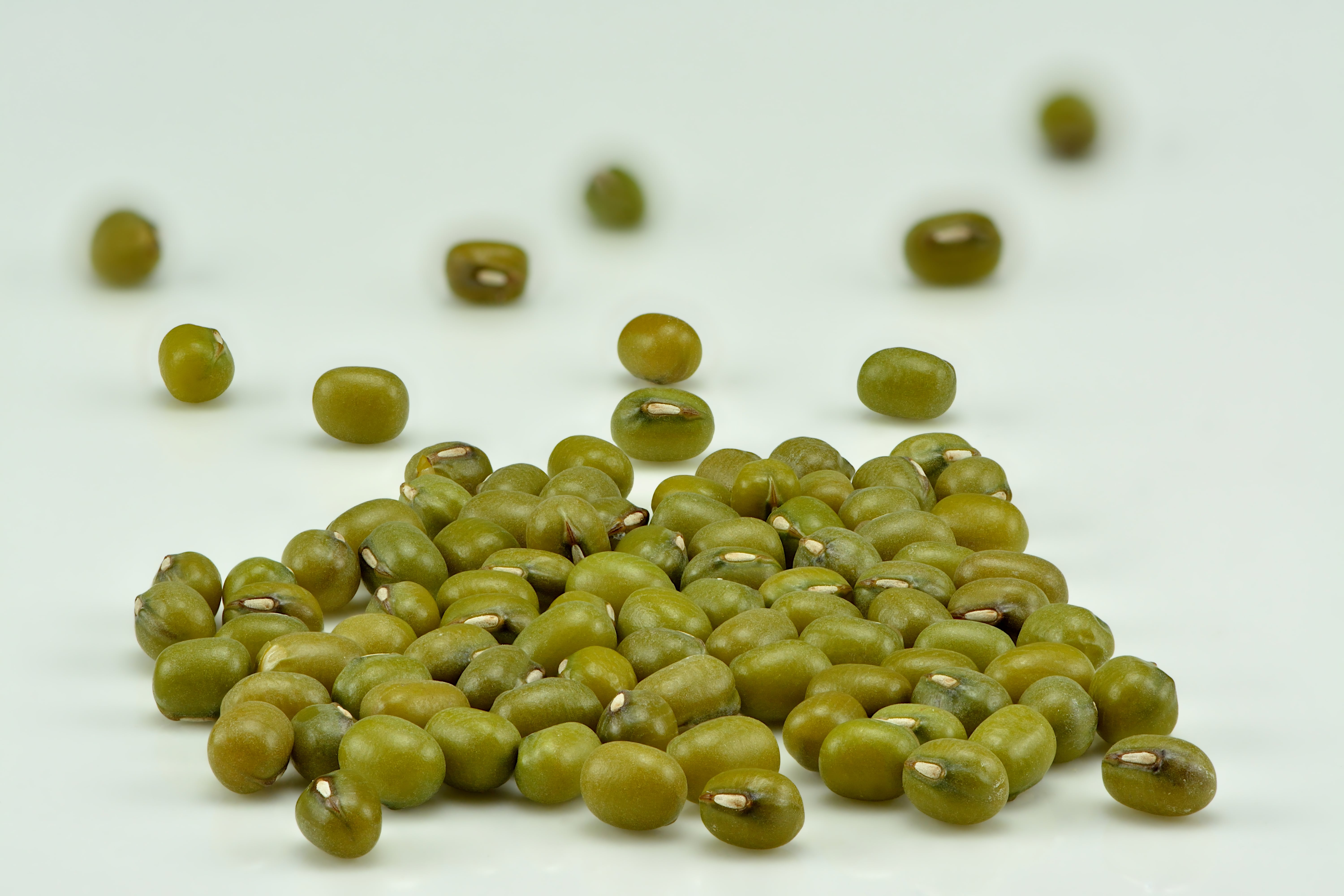
Introduction to Green Gram
Green gram, commonly known as moong dal, is a leguminous crop scientifically referred to as Vigna radiata. It is a staple food in many parts of the world, particularly in Asia, where it is prized for its high nutritional content and versatility in cooking. Originating from the Indian subcontinent, green gram has been cultivated for thousands of years and plays a crucial role in sustainable agriculture due to its ability to fix atmospheric nitrogen, enriching the soil naturally. Its importance in crop rotation and intercropping systems makes it an invaluable crop for farmers.

Nutritional Value of Green Gram
Green gram is not just a vital agricultural crop but also a nutritional powerhouse. It is rich in protein, essential amino acids, dietary fibre, and various vitamins and minerals. The seeds contain approximately 24% protein, making it an excellent source of plant-based protein for vegetarian and vegan diets. Additionally, green gram is a good source of iron, magnesium, potassium, and B vitamins, which are essential for maintaining good health. Its low glycemic index makes it an ideal food for diabetics and those looking to manage their blood sugar levels.
| Protein | 24-25% |
| Fat | 1.3% |
| Minerals | 3.5% |
| Fibre | 4.1% |
| Carbohydrate | 56% |
| Calcium | 124 mg/100 g |
| Phosphorus | 326 mg/100 g |
| Iron | 7.3 mg/100 g |
| Calorific Value | 334 Kcal/100 g |
| Moisture | 10% |
State-Wise Recommended Varieties
Different states in India have developed and recommended specific varieties of green gram that are well-suited to local climatic conditions. The selection of the right variety is crucial for optimising yield and quality. Here are some state-wise recommendations:
| State | Recommended Varieties |
|---|---|
| Punjab | ML 267, SML 668 |
| Haryana | Asha, SML 668, SML 832 |
| Rajasthan | RMG 62, RMG 344 |
| Maharashtra | Vaibhav, Phule M-2 |
| Tamil Nadu | CO 4, CO 5, VBN 1 |
| Karnataka | KKM 3, Chinamung, Pusa Vishal |
| Andhra Pradesh | LGG 407, LGG 460, TM 96-2 |
| Bihar | Pusa 9531, Samrat |
| Uttar Pradesh | Pant Mung 4, Narendra Mung 1 |
Ideal Climatic Conditions for Green Gram
Green gram is a warm-season crop that thrives best in hot and humid conditions. The optimal temperature range for its growth is between 25°C and 35°C. The crop is sensitive to frost and waterlogging, so it is ideally grown in areas with well-distributed rainfall ranging from 600 to 1,000 mm during its growing period. In regions where the monsoon is well-defined, the Kharif season (June to September) is the best time for cultivation.
Soil Selection and Preparation
Green gram can be cultivated on a wide range of soils, but it performs best on well-drained loamy to sandy loam soils with a pH range of 6.2 to 7.5. Proper field preparation is essential to create a conducive environment for seed germination and root development. The field should be ploughed 2-3 times to achieve a fine tilth, followed by levelling. Incorporating organic matter such as farmyard manure (FYM) or compost during the final ploughing can significantly improve soil fertility and structure.
Sowing Strategies
The timing of sowing plays a crucial role in the successful cultivation of green gram. The sowing period varies depending on the region and the cropping season. Generally, for the Kharif season, sowing is done in June-July, while for the Rabi season, it is done in October-November. In summer, the crop can be sown in February-March. Sowing at the correct time ensures that the crop receives adequate sunlight and water, leading to better growth and yield.
Seed Rate, Spacing, and Sowing Techniques
To achieve optimal plant density and maximise yield, the correct seed rate and spacing are vital. The recommended seed rate for green gram is 15-20 kg per hectare. Seeds should be sown at a spacing of 30-45 cm between rows and 10-15 cm between plants. This spacing allows for sufficient air circulation and sunlight penetration, reducing the risk of diseases. Line sowing using a seed drill or dibbling method is preferred for uniform seed distribution and depth control.
Essential Seed Treatment Practices
Seed treatment is an important step in safeguarding the crop from seed-borne diseases and pests. Treating seeds with fungicides such as Thiram or Carbendazim at the rate of 2 g/kg of seed helps protect against fungal infections. Additionally, inoculating seeds with Rhizobium culture specific to green gram enhances nitrogen fixation, leading to better growth and yield.
Cropping Systems for Green Gram
Green gram fits well into various cropping systems due to its short duration and ability to improve soil fertility. It is often grown as a sole crop, mixed crop, or intercrop with cereals, oilseeds, or other legumes. Common cropping systems include:
- Rice-Green Gram: Green gram is grown as a relay crop after the rice harvest.
- Cotton-Green Gram: Green gram is intercropped with cotton to utilize the available resources efficiently.
- Maize-Green Gram: Green gram is sown between maize rows as an intercrop.
Intercropping Opportunities
Intercropping green gram with other crops is a common practice that enhances farm income and resource use efficiency. Crops like sorghum, pearl millet, maize, and cotton are ideal companions for intercropping with green gram. This practice not only diversifies farm income but also reduces the risk of total crop failure due to adverse climatic conditions or pest attacks.
Manure and Fertilizer Management
Green gram benefits greatly from the application of both organic and inorganic fertilizers. Incorporating well-decomposed FYM or compost at the rate of 5-10 tons per hectare during field preparation provides a good nutrient base. For inorganic fertilizers, a basal dose of 20-25 kg of nitrogen (N), 40-50 kg of phosphorus (P2O5), and 20-25 kg of potassium (K2O) per hectare is recommended. Top dressing with nitrogen at 20-25 kg/ha at the flowering stage can boost pod formation and yield.
Managing Secondary and Micro Nutrients
- Sulphur:
- Apply 20 kg S/ha (154 kg gypsum/phospho-gypsum or 22 kg bentonite sulphur) in medium black and sandy loam soils.
- In red sandy loam soils with S deficiency, apply 40 kg S/ha (300 kg gypsum/phospho-gypsum or 44 kg bentonite sulphur).
- Zinc:
- Red sandy and loamy soils: 2.5 kg Zn/ha (12.5 kg zinc sulphate heptahydrate or 7.5 kg zinc sulphate monohydrate).
- Black soils: 1.5-2.0 kg Zn/ha (7.5-10 kg zinc sulphate heptahydrate or 4.5-6.0 kg zinc sulphate monohydrate).
- Laterite, medium, and alluvial soils: 2.5 kg Zn/ha with 200 kg FYM.
- High organic carbon Tarai soils: 3.0 kg Zn/ha every three years.
- Low organic carbon hilly sandy loam soils: 2.5 kg Zn/ha every alternate year.
- Boron: Apply 0.5 kg B/ha (5 kg borax or 3.6 kg di-sodium tetra borate pentahydrate).
- Manganese: Seed soak with 2% manganese sulphate or apply a foliar spray of 1% manganese sulphate in deficient sandy loam soils.
- Molybdenum: Apply 0.5 kg Sodium Molybdate/ha or use two foliar sprays of 0.1% Sodium Molybdate or seed treatment in deficient soils
Effective Water Management Techniques
Green gram is relatively drought-tolerant but requires adequate moisture during critical growth stages such as flowering and pod filling. Irrigation should be scheduled based on soil moisture levels and crop requirements. Over-irrigation can lead to waterlogging, which is detrimental to the crop. Drip irrigation is an efficient method for water management, ensuring that water reaches the root zone with minimal wastage.
Weed Management Strategies
Weed competition is a major challenge in green gram cultivation, particularly during the early stages of growth. Effective weed management is essential to ensure the crop’s success. Pre-emergence herbicides like Pendimethalin at 1-1.5 kg/ha can be applied within 3 days of sowing to control weeds. Manual weeding or intercultural operations should be carried out 20-25 days after sowing to keep the field weed-free.
Plant Protection Measures
- Yellow Mosaic Virus (YMV)
- Symptoms: Yellow mosaic spots on tender leaves, leading to complete yellowing and reduced flowering/pod development. Early infection can cause plant death.
- Control: Rogue out diseased plants; spray with triazophos 40 EC, malathion 50 EC, or oxydemeton methyl 25 EC @ 2.0 ml/l every 10-15 days if needed. Use resistant varieties like Narendra Mung1, Pant Mung 3, etc.
- Leaf Curl
- Symptoms: Crinkling and thickening of leaves, visible around the third leaf after 3-4 weeks of sowing. Plants remain alive until harvest.
- Control: Treat seeds with imidacloprid 70 WS @ 5ml/kg; apply foliar spray of dimethoate 30 EC @ 1.7ml/ha at 30 days post-sowing. Use resistant varieties like D-3-9, K 12, etc.
- Anthracnose
- Symptoms: Brown sunken spots with dark centers and orange margins on leaves and pods; can cause seedling blight.
- Control: Hot water seed treatment at 58°C for 15 minutes; treat seeds with carbendazim 50 WP @ 2g/kg; spray carbendazim @ 2g/litre of water at the first appearance of symptoms, and repeat after 15 days if necessary.
- Cercospora Leaf Spot
- Symptoms: Circular or irregular brown to greyish-white spots with reddish-brown margins on leaves and pods.
- Control: Practice field sanitation and crop rotation; treat seeds with thiram or captan @ 2.5g/kg; spray carbendazim 50 WP @ 1g/litre or mancozeb 75 WP @ 2g/litre, repeating every 10-15 days if needed. Copper oxychloride @ 3-4g/litre is also effective.
Insect-Pest Management
- Whitefly
- Damage: Causes downward cupping of leaves, blackening, reduced photosynthesis, and plant death. Transmits mungbean yellow mosaic virus (MYMV).
- Control: Treat seeds with Dimethoate 30 EC @ 5ml/kg; apply foliar spray of Triazophos 40 EC or Malathion 50 EC @ 2.0 ml/l every 10-15 days; use cotton as a trap crop and maize/sorghum/pearl millet as barrier crops; install sticky traps; grow resistant varieties (e.g., ML 1256, ML 1260, ML 1191).
- Bean Thrips
- Damage: Feeds on flowers leading to shedding, bushy growth, and a few pods with shrivelled grains.
- Control: Seed treatment with Thiomethoxam 70 WS @ 2 ml/kg; spray with Thiomethoxam 25 WG @ 0.2 g/l, neem oil, or neem seed kernel extract; ensure timely irrigation; intercrop with cotton; spray Triazophos 40 EC or Ethion 50 EC @ 2 ml/l.
- Stem Fly
- Damage: Maggots bore into leaves and stems, causing withering drooping, and plant death.
- Control: Practice clean cultivation, crop rotation, and use trap crops; treat seeds with Imidacloprid 17.8 SL or Thiomethoxam 25 WG; spray Imidacloprid or Thiomethoxam at 15 days post-sowing.
- Bihar Hairy Caterpillar
- Damage: Young caterpillars eat leaves, leading to perforated, dusty-white leaves. Mature caterpillars feed voraciously, potentially leading to total crop failure.
- Control: Uproot and bury damaged plants with larvae; spray Quinalphos 25 EC @ 2.5 ml/l, Dichlorvos 10 EC @ 1.0 ml/l, or Fenvalerate 20 EC @ 1.87 ml/l; dust with Fenvalerate 0.4% @ 15 kg/ha.
Harvesting, Threshing, and Storage
Harvesting green gram (mung bean) requires careful timing to ensure maximum yield and quality. Here are the key steps:
- Timing: Harvest when 80-90% of the pods have matured, typically around 60-70 days after planting. Mature pods turn brown or black, and seeds inside should be firm and fully developed.
- Method:
– Manual Harvesting: Cut the plants at the base or pull them out by hand. This method is labor-intensive but can reduce damage to the pods.
– Mechanical Harvesting: Use a combine harvester if available, especially for larger fields.
- Drying: Spread the harvested plants in a thin layer on a clean surface, like a tarpaulin or concrete floor, to sun-dry for 2-3 days. This ensures the pods are dry enough to thresh without moisture content.
- Threshing: Beat the dried plants with sticks or use a thresher machine to separate the seeds from the pods.
- Cleaning: Clean the seeds by winnowing or using a seed cleaner to remove any debris, dirt, or broken seeds.
- Storage: Store the seeds in a cool, dry place with good ventilation to prevent spoilage or pest infestation. Use airtight containers or bags if moisture content is below 12%.
Expected Yields
The yield of green gram varies depending on the variety, cultivation practices, and environmental conditions. On average, the yield ranges from 0.8 to 1.2 tons per hectare under rainfed conditions, while irrigated crops can yield up to 1.5 tons per hectare. Improved varieties and best management practices can significantly enhance productivity.
By following these recommendations and adapting to local conditions, farmers can significantly increase green gram productivity, contributing to better livelihoods and sustainable agriculture.
Connect with Us.
Every step, from planting to processing, shapes your success. With the right methods, your mulberries can thrive. At Agrigo24/7, we’re here to guide you with expert advice and innovative solutions. Let’s grow a prosperous future together.
Leave a Reply