
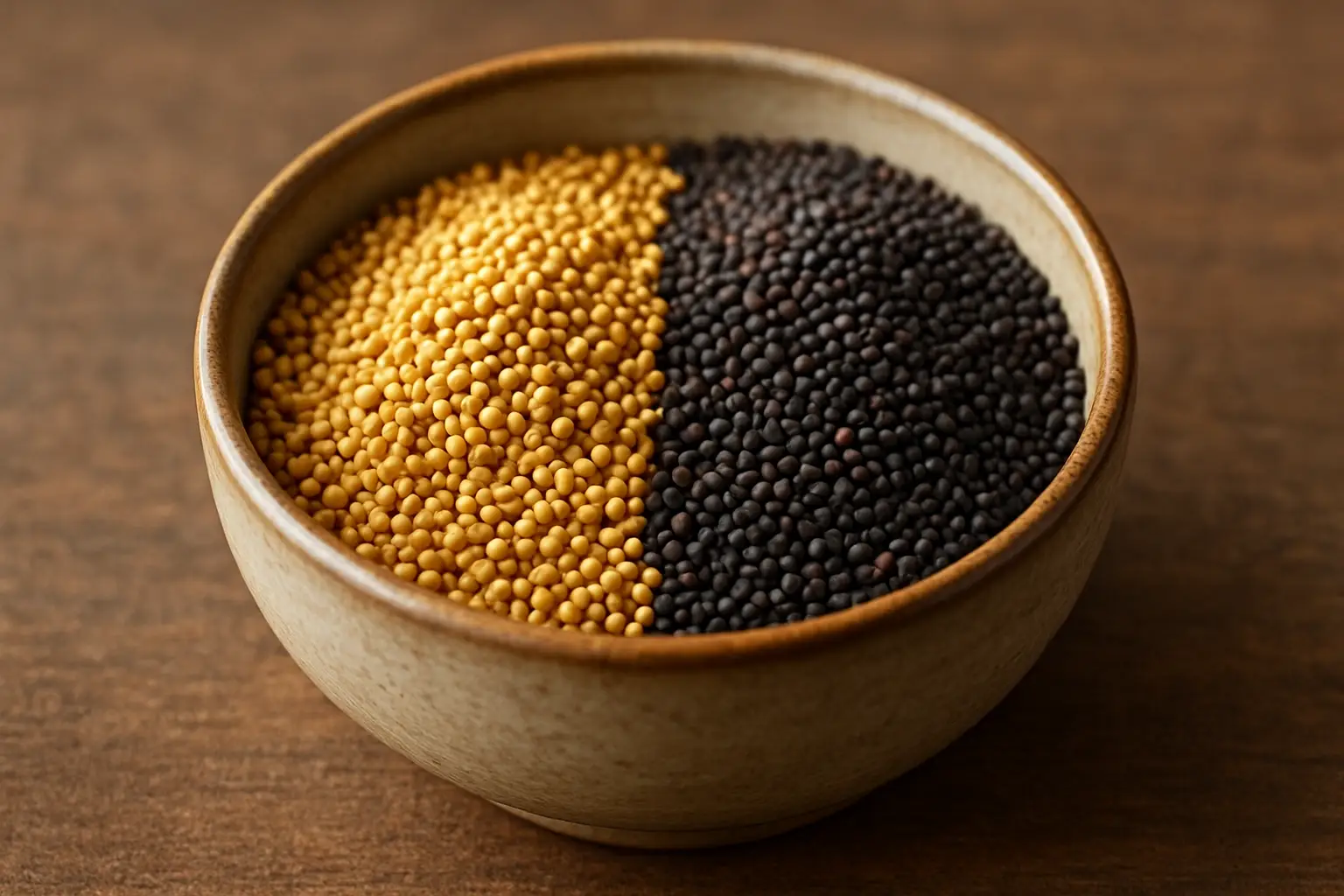
Why Mustard is More Than Just a Spice?
Mustard, commonly used as a spice and oilseed, is a powerhouse of nutrition and economic value. Its cultivation spans centuries, and it remains a staple crop in regions with temperate climates. Rich in oils and proteins, mustard is primarily grown for its seeds, which are used to produce mustard oil, condiments, and even biofuel. This article delves into the critical aspects of mustard cultivation, exploring its growth requirements, care, and protection from pests, with a focus on maximizing yield and quality.

The Benefits of Mustard
Mustard (Brassica spp.) offers multiple benefits, making it highly valuable to farmers. Not only is it a major source of edible oil, but it also provides feed for livestock through its by-products. Its leaves are consumed as a green vegetable in many cultures, and the oilcake left after oil extraction is a high-protein animal feed. Mustard oil contains high levels of mono-unsaturated fats, which promote heart health. Its medicinal properties are also widely recognized, with mustard oil being used in traditional remedies to treat joint pain, respiratory problems, and skin conditions.
Beyond health benefits, mustard is an excellent rotational crop. Its deep roots help in breaking up compacted soils, improving soil structure for future crops. Additionally, mustard has allelopathic properties, meaning it can suppress weeds naturally when used in rotation with other crops.
Mustard’s Native Habitat: Where Does It Thrive?
Mustard is a hardy plant that has its origins in temperate regions, especially around the Mediterranean. Today, it is grown across many parts of the world, particularly in temperate and subtropical regions. India, Canada, China, and parts of Europe are among the largest producers of mustard.
The ideal environment for mustard includes cool temperatures, adequate rainfall, and fertile, well-drained soils. It is an adaptable crop that can be grown in diverse climates, from semi-arid to humid regions, making it a versatile option for many farmers.
The Mustard Varieties: Choosing the Right Seed
Several mustard varieties are cultivated based on the specific purpose and growing conditions. Key varieties include:
-
Yellow Mustard (Brassica hirta):
Known for its mild flavour, used in condiments and sauces.
-
Brown Mustard (Brassica juncea):
Stronger in flavour, primarily used for oil extraction.
-
White Mustard (Sinapis alba):
Used mainly as a cover crop and in animal feed, with mild seeds.
-
Black Mustard (Brassica nigra):
Known for its pungent seeds, mostly used in traditional recipes and spice blends.
The choice of variety depends on the purpose, climatic conditions, and market demand. Brown and black mustard are commonly used for oil extraction, while yellow and white mustard varieties are favoured in the food industry for their mild flavour.
Cultivation Methods and Techniques of Mustard
Finding the Perfect Plot: Site Selection for Mustard
Soil, Climate, and pH:
Mustard thrives best in loamy to sandy loam soils that are well-drained and rich in organic matter. The soil should be free from waterlogging, as mustard is sensitive to excessive moisture, especially at germination and early growth stages. The ideal soil pH for mustard ranges between 6.0 and 7.5, with slightly alkaline soils being tolerable but not ideal.
Mustard prefers a cool, dry climate with temperatures between 10°C and 25°C during the growing season. Although the crop can withstand mild frosts, exposure to extreme cold during flowering can significantly reduce yields. Mustard requires about 350 to 500 mm of rainfall during the growing season, with well-timed showers during the vegetative stage and dry conditions at harvest.
Seed Preparation and Propagation: Setting the Stage for Growth
Mustard is propagated directly from seeds. For optimal germination, select certified seeds of high-yielding, disease-resistant varieties. Seed treatment is essential to reduce fungal infections; seeds should be treated with Thiram or Carbendazim at 2 g per kg of seed before sowing. This helps protect the seeds from soil-borne diseases like damping-off.
The ideal seed rate for mustard is around 4-5 kg per hectare, ensuring proper plant population. The seeds should be sown at a depth of 1.5 to 2.5 cm for uniform germination. Use a seed drill for precise sowing, ensuring a row-to-row spacing of 30-45 cm and plant-to-plant spacing of 10-15 cm.
Preparing the Land: Getting the Ground Ready
Land preparation for mustard begins with deep ploughing (15-20 cm) to break up compacted soil, followed by harrowing to create a fine seedbed. Proper soil aeration is crucial for healthy root growth. Additionally, incorporate well-rotted organic manure (5-6 tons per hectare) during ploughing to improve soil fertility and structure.
After initial ploughing, the field should be levelled to ensure uniform water distribution, especially in areas prone to waterlogging. Weeds and crop residues should be cleared to reduce competition and pest risks.
Planting Mustard: When and How to Sow
Mustard is typically sown during the Rabi season (winter) in India, between October to November. Sowing should be done when soil moisture levels are adequate, either after rainfall or with light irrigation. For better seed-to-soil contact, firm the soil after sowing with a roller or wooden plank.
Direct seeding is the most common method, but in some cases, mustard may also be transplanted from nurseries to the field. However, direct seeding is more cost-effective and less labour-intensive.
Watering and Weeding: The Secrets to Healthy Mustard
Irrigation
Mustard is relatively drought-tolerant, but timely irrigation is key to ensuring high yields. The first irrigation should be provided 25-30 days after sowing, particularly if the crop is experiencing dry weather. Subsequent irrigations can be spaced every 20-25 days, depending on soil moisture and rainfall. Typically, 2-3 irrigations are sufficient during the growing season.
Over-irrigation should be avoided as it may cause waterlogging, which can stunt growth and encourage root diseases. If the soil tends to retain moisture, less frequent irrigation may be required.
Weed Control
Weed management is critical during the first 30-45 days after sowing, as mustard competes poorly with weeds. Manual weeding is effective but labour-intensive. Chemical weed control options include pre-emergence herbicides like Pendimethalin (1.0-1.5 kg a.i./ha) applied just after sowing. For post-emergence weed control, Quizalofop-ethyl (50 g a.i./ha) can be applied 20-25 days after sowing.
Weeds like Chenopodium album, Phalaris minor, and Avena fatua are common in mustard fields and can be effectively managed with timely herbicide applications and manual removal.
Fertilizing Mustard: Feeding the Soil for Maximum Yields
A balanced fertilizer regime is essential for mustard. Apply 80 kg of Nitrogen (N), 40 kg of Phosphorus (P), and 40 kg of Potassium (K) per hectare. Apply half of the nitrogen and the full dose of phosphorus and potassium at the time of sowing. The remaining nitrogen should be top-dressed 25-30 days after sowing to promote strong vegetative growth.
Additionally, applying Sulphur at 20-25 kg per hectare enhances oil content and seed quality. Micronutrients like zinc (ZnSO4 at 25 kg/ha) can also improve yields in deficient soils.
Protecting Mustard from Diseases and Pests: Stay Ahead of the Game
Common Diseases and Their Management
- White Rust (Albugo candida): A fungal disease causing white pustules on leaves and stems. Prevent this by using disease-resistant varieties and applying Mancozeb (0.2%) or Chlorothalonil (0.1%) at the initial stage.
- Alternaria Blight (Alternaria brassicae): Causes black spots on leaves and pods, reducing seed yield. Spraying Dithane M-45 or Ridomil (0.2%) can control this disease.
- Downy Mildew (Peronospora parasitica): Characterized by yellow patches on leaves and stunted growth. Control it by spraying Metalaxyl (0.1%).
Pest Control: Keeping the Insects at Bay
- Aphids (Lipaphis erysimi): These sap-sucking pests are common in mustard crops and can cause significant yield loss. Use Dimethoate (0.03%) or Imidacloprid (0.005%) as foliar sprays when aphid populations rise.
- Painted Bug (Bagrada hilaris): Causes wilting and stunted growth. Spraying Malathion (0.1%) can control infestations.
- Mustard Sawfly (Athalia proxima): Defoliates the crop, particularly young plants. Control with Quinalphos (0.05%) spray during early stages.
Harvesting Mustard: Timing it Right
Mustard is typically ready for harvest 110-140 days after sowing, depending on the variety and growing conditions. The crop should be harvested when 75-80% of the pods have turned yellow. Delaying harvesting can lead to shattering of the pods, causing significant seed loss. Harvesting is usually done by cutting the plants at the base and bundling them for drying. After a few days of drying, the crop is threshed to separate the seeds from the pods.
Threshing can be done manually or with a mechanical thresher, which is more efficient for large-scale production. Once threshed, the seeds should be cleaned and sun-dried to reduce their moisture content to about 8-10%, ensuring they are suitable for storage and reducing the chances of mold or fungal attacks.
Post-Harvest Care: Storing Your Bounty
Post-harvest management is crucial for maintaining seed quality and preventing losses. After drying the seeds, store them in moisture-proof, airtight containers to protect them from pests and humidity. Proper storage is essential, as mustard seeds are prone to infestation by insects like the Khapra beetle (Trogoderma granarium) and molds if stored improperly.
Mustard seeds can be stored for up to a year under optimal conditions, with regular monitoring to detect any signs of pest infestation. If needed, fumigation with chemicals like Aluminium Phosphide can be done to control stored grain pests.
Intercropping with Mustard: Maximize Your Field’s Potential
Intercropping mustard with other crops is a smart farming practice that enhances land use and improves overall farm productivity. Common intercrops with mustard include wheat, gram (chickpeas), lentils, and barley.
The benefits of intercropping include better utilization of resources, weed suppression, and reduced soil erosion. Mustard, being a tall crop, pairs well with short crops like lentils or gram that don’t compete for sunlight. Moreover, mustard’s deep roots help in nutrient cycling, bringing up nutrients from deeper layers of soil for the shallow-rooted crops.
In an intercrop system, follow a row ratio of 1:3 (one row of mustard for every three rows of the intercrop) for optimal resource use. Ensure the mustard plants receive enough sunlight and space for healthy growth. Additionally, stagger the sowing times slightly to prevent competition for nutrients and water.
Intercropping can also help in pest management. For example, growing mustard alongside coriander or garlic can reduce aphid infestations naturally, as these crops repel aphids. However, pests and diseases are still a significant concern, so it’s crucial to stay vigilant.
Connect with Us
Wishing you a bountiful and prosperous amaranth harvest! For further assistance or any queries E-mail us, please feel free to reach out to your local agricultural experts @ Agrigo 24/7
Leave a Reply