
General Information
Botanical Name: Prunus persica
Family: Rosaceae
Origin: China
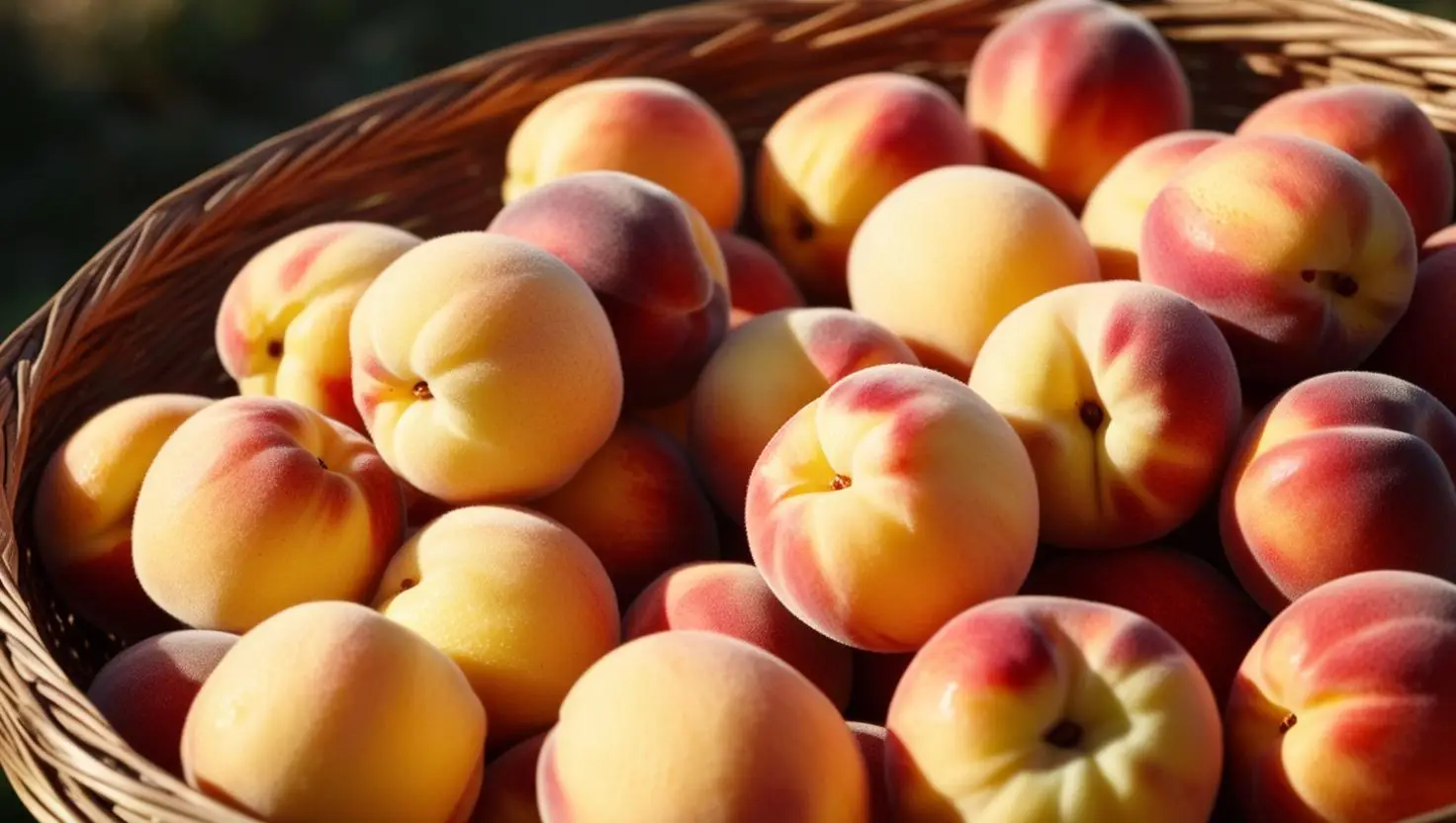
Peach is a temperate fruit tree but can also thrive in the sub-tropical climate of Punjab, thanks to the availability of suitable low-chilling cultivars and advanced production technology. In Punjab, approximately 300 chilling hours are available, and cultivars requiring fewer than 300 chilling hours can be grown successfully. Peach cultivation is widespread throughout the state due to its economic and nutritional benefits. Peaches are highly valued as table fruit for their attractive colour and palatability. They can be processed into various products such as canned and dried fruits, frozen preserves, jam, nectar, juice, beverages, and marmalade. Peaches are also a good source of a low-calorie diet, rich in carbohydrates, minerals, and proteins.

Climate and Soil
The sub-tropical climate of Punjab is ideal for cultivating low-chilling peach varieties during the winter months, which is sufficient to break the dormancy of these cultivars. From March to June, the climate is warm to hot (35°-42°C), which favours fruit development and maturity, provided there is an adequate water supply. Peaches thrive in loamy sand or sandy loam, well-drained, fertile soils with a lime content of less than 10%. Heavy, wet soils are unsuitable for peach cultivation. The optimal soil conditions include an electrical conductivity below 0.5 m mhos/cm, calcium carbonate content of less than 5%, lime content of less than 10%, no hard pan up to a depth of 120 cm, and a pH range of 6-8.
Popular Varieties and Their Yield
Yellow Fleshed Varieties
- EarliGrande (1997): Semi-vigorous tree, high yielding, with fruits maturing in the first week of May. Fruits are large (90 g), firm-fleshed, freestone at full ripe stage, and of good keeping quality. TSS is 10.5% and acidity is 0.7%.
- Florda Prince (1997): Vigorous tree with medium-sized fruits (65-70 g) maturing in the fourth week of April. Fruits are yellow with a red blush, firm, and freestone at full ripe stage. Average yield is 100 kg per tree, TSS 12%, and acidity 0.5%.
- Partap (1990): Medium-vigour tree with medium-sized fruits (65-70 g) maturing in the third week of April. Fruits are almost round, yellow with red over colour, firm, and freestone at full ripe stage. The average yield is 70 kg per tree, TSS 12%, and acidity 0.7%.
- Shan-i-Punjab (1979): Vigorous tree with large fruits maturing in the first week of May. Fruits turn yellow with a red blush at maturity. The average yield is 70 kg per tree, and the flesh is firm and freestone at the fully ripe stage, good for canning. TSS is 12% and acidity is 0.74%.
White Fleshed Varieties
- Prabhat (2003): Semi-vigorous tree with medium-sized fruits maturing in the third week of April. Fruits are medium round with an attractive red blush, white flesh, juicy, sweet, and freestone at full ripe stage. The average yield is 64 kg per tree. TSS is 12% and acidity is 0.37%.
- Sharbati (1967): Very vigorous tree with medium-sized fruits maturing from the end of June to the first week of July. Fruits are clingstone, turning greenish yellow with pink patches at maturity. Yield per tree is 100-120 kg, TSS 13%, and acidity 0.33%.
Nectarine
- Punjab Nectarine (2008): Vigorous, spreading tree with large, fuzzless fruits maturing in the second week of May. Fruits are 90 g, round, attractive with 90-100% red blush over yellow ground colour at maturity, yellow flesh, firm, melting, and freestone at full ripe stage. The average yield is about 40 kg/plant, TSS 11.5%, and acidity 0.8%.
Propagation
Peach is commonly propagated by budding or grafting on rootstocks such as Flordaguard and Sharbati.
Rootstock Raising
Ripe fruits of Sharbati or Flordaguard are collected in June-July, and the stones are extracted, washed, and dried under shade for 4-5 days. Treated with fungicides such as Ziram, Thiram, or Captan, the stones are then stored until stratification from November to January. Stratification involves a low-temperature treatment where stones are placed in alternate layers of moist sand at or below 7.2°C for 100-120 days until seed dormancy is broken.
Budding/Grafting
About 40% of seedlings from the nursery plots become fit for T-budding in the first week of May. Successful budded plants are ready for transplanting in December-January. The rest of the seedlings are used for grafting in December-January.
Stenting Technique
Peach plants can be propagated by the stenting technique (simultaneously grafting and rooting) in the first week of January by dipping the basal portion of the Sharbati cutting (rootstock) in 2000 ppm IBA solution for 2 minutes, reducing the propagation period by one year.
Planting
Peaches should be planted during winter when the plants are dormant, from the end of December to the end of January. Healthy, one-year-old nursery plants free from nematodes and crown gall disease should be used. The plant-to-plant distance is 6.5 x 6.5 meters in a square planting system, though high-density planting with a spacing of 6 m x 1.5 m using a ‘Y’ system of training ensures higher yields and better fruit quality.
Training and Pruning
Training and pruning are crucial for controlling tree size and ensuring new growth annually for fruit-bearing.
Training
Peach plants are trained according to the modified leader system:
- At planting, one-year-old plants are headed back to about 90 cm, with side shoots cut to one or two bud stubs.
- In the first pruning, select 4-5 healthy, well-placed branches spirally located on the plant axis, removing all others. The lowest branch should be at 45 cm from the ground.
- In the next season, select 3-4 more well-placed branches on the central branch, restricting the vertical growth of the leader branch.
Pruning
Fruit is borne on one-year-old shoots, so pruning involves thinning out some of these shoots and heading back to old or unsuitably placed branches. About 40% of one-year-old shoots should be thinned to ensure proper tree growth and improve fruit size and quality. Pruning is best done in January, with cuts thicker than 5 cm covered with Bordeaux paste followed by Bordeaux paint after 1-2 weeks.
Fruit Thinning
Peach trees are heavy fruit bearers, requiring annual thinning to ensure fruit quality and marketable yield. In varieties like Partap, thinning is best done in the second and third weeks of March, while in Shan-i-Punjab, it is in the third to fourth weeks of March. Girdling plus thinning or girdling alone advances fruit maturity and improves quality. Fruit-to-fruit distance on the shoots should be 10-15 cm, and the operation should be completed before pit hardening.
Manures and Fertilizers
Fruiting is an exhaustive process, of removing significant nutrients from the soil. Annual application of fertilizers based on tree age is essential:
| Age of Tree (years) | Farmyard Manure (kg/plant) | Urea (g) | Super Phosphate (g) | Muriate of Potash (g) |
| 1-2 | 10-15 | 180-360 | 190-380 | 150-300 |
| 3-4 | 20-25 | 540-1000 | 570-760 | 450-380 |
| 5 and above | 30 | 1000 | 760 | 830 |
Iron deficiency is common on light-textured, high-pH soils, evident through interveinal chlorosis. Correct this by spraying with 0.3% ferrous sulfate solution on spring, summer, and late summer flushes.
Irrigation
The critical period for irrigation is from fruit set in March until maturity, depending on the variety. Trees should not suffer from moisture stress, particularly 25-30 days before maturity. Irrigation frequency depends on soil type and water source, generally requiring weekly irrigation for the first 3-4 weeks after fruit set and then every 3-4 days from mid-April to harvest.
Weed Control
Weeds should be controlled by manual ploughing, and mulching with paddy straw (10 cm layer) at 4.5 tons per acre during the first week of March effectively suppresses weeds. Mulching should be done after applying the second split dose of inorganic fertilizers.
Fruit Maturity and Harvesting
Peach fruits should be harvested at the right maturity stage based on the market destination. For distant markets, fruits are picked at a firm mature stage when the ground colour changes from green to yellow. For local markets, fruits are picked when nearly ripe. Harvesting is done by hand and requires multiple pickings. Proper handling, including cooling to 5°C within 24 hours of harvest and transportation under refrigerated conditions, can extend the shelf life of fruits. Peaches stored at 0°-3.3°C with 85-90% relative humidity can last up to 25 days.
Post-Harvest Handling
Peach fruits are sorted, graded, and packed in corrugated fiberboard boxes or bamboo baskets for better marketability. Treatments like dipping fruits in calcium chloride solution before storage help extend shelf life and maintain fruit quality.
Plant Protection Measures
Effective plant protection measures are crucial for maintaining healthy orchards and ensuring high yields. Control methods for various pests and diseases include:
- Mealy Bug
Control: Spray the soil with chlorpyriphos 20 EC @ 3 ml/litre of water or dust quinalphos 1.5% @ 50 kg/ha in February-March.
- Peach Leaf Curl Aphid
Control: Spray dormant trees with Chlorpyriphos 20 EC @ 3 ml/litre of water before bud burst in mid-January. Spray Metasystox 25 EC @ 1 ml or Rogor 30 EC @ 1 ml/litre of water after fruit set.
- Peach Black Aphid
Control: Spray Metasystox 25 EC @ 1 ml/litre of water during spring.
- Chaffer Beetles
Control: Collect beetles by shaking infested plants on a polythene sheet in the morning and destroy them.
- Hairy Caterpillars
Control: Spray Malathion 50 EC @ 2 ml/litre of water.
- Fruit Flies
Control: Use pheromone traps and spray Malathion 50 EC @ 2 ml/litre of water at 15-day intervals from mid-April to mid-June.
- Flat-Headed Borer
Control: Paint tree trunks with Bordeaux paint and keep orchards clean.
- Plum Caseworm
Control: Apply carbaryl 50 WP @ 2 g/litre of water.
- Shot Hole
Control: Spray trees with Bordeaux mixture (2:2:250) during dormancy.
- Bacterial Canker
Control: Spray streptocycline @ 100 ppm with copper oxychloride 0.3% during the pre-monsoon period.
By adhering to these guidelines, farmers in Punjab can cultivate peaches successfully, ensuring high yields and quality fruits suitable for both local and distant markets. Proper management of climatic conditions, soil health, plant protection, and post-harvest handling are essential for maximizing the benefits of peach cultivation.
Wishing you a bountiful and prosperous Peach harvest! For further assistance or any queries, please feel free to reach out to your local agricultural experts @ Agrigo 24/7
Leave a Reply