
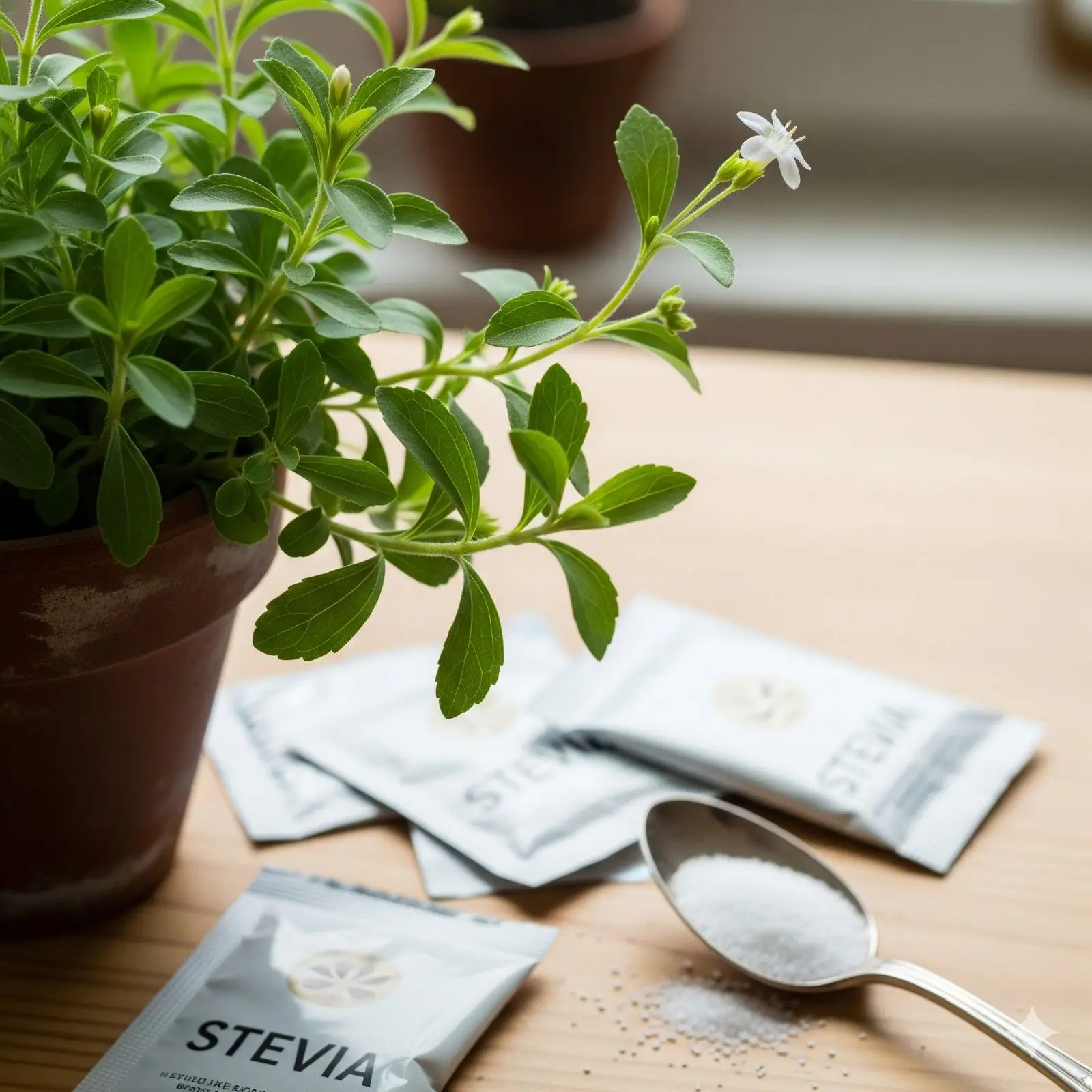
Why Stevia Matters Today?
Sugar is sweet, but it comes with health risks. People around the world are now reducing sugar use. At the same time, demand for natural sweeteners is growing fast. Stevia is one of the best choices in this field.
Stevia is a plant that gives zero-calorie sweetness. It is 200–300 times sweeter than sugar. Farmers, businesses, and health-conscious people now see it as a natural solution. Because of this, the global stevia market is expanding every year.
In this guide, we will look at how to grow stevia, care for the crop, harvest it, and tap into the artificial sweetener market.
What is Stevia?
Stevia (Stevia rebaudiana) is a green leafy herb. It belongs to the sunflower family. Its leaves contain natural compounds called steviol glycosides. These compounds are the reason for its sweet taste.
Unlike sugar, stevia does not raise blood sugar levels. Therefore, it is safe for people with diabetes. Also, it has no calories, which makes it perfect for weight control.

History and Origin of Stevia
Stevia comes from South America. Indigenous people in Paraguay and Brazil have used it for centuries. They used stevia leaves to sweeten tea and medicines.
In the 20th century, Japan began large-scale cultivation of stevia. Later, other countries followed. Today, stevia farming is spreading across Asia, Europe, and North America.
Why Choose Stevia Farming?
There are many reasons why farmers are moving to stevia.
- It is a high-value crop.
- Demand is growing in the food and beverage industry.
- It requires less land compared to sugarcane for the same sweetness output.
- It offers better returns than many traditional crops.
For entrepreneurs, stevia means entry into the artificial sweetener industry. For farmers, it means good income with fewer resources.
Climate and Soil Requirements for Stevia
Stevia grows well in warm and sunny climates.
- Temperature: Ideal range is 20–30°C. Extreme frost harms the plant.
- Rainfall: Needs moderate rainfall but should not be waterlogged.
- Soil: Prefers sandy loam soil with good drainage. Heavy clay soils are not suitable.
- pH level: Best between 6.5 and 7.5.
Because stevia hates standing water, raised beds or ridges are often used.
Varieties of Stevia
Several improved varieties are now available. Each variety differs in leaf yield and sweetness content.
- Morita II: Popular in Asia, high sweetness content.
- Ecuadorian varieties: Good leaf yield.
- Indian varieties (SRB, CIMAP lines): Developed for local conditions.
Farmers should select varieties that suit their soil and climate.
Propagation and Planting of Stevia
Farmers can grow stevia either by seeds or by cuttings.
- Seed propagation: Seeds are small and germination is often poor. Because of this, commercial farming rarely uses seeds.
- Cuttings or root division: More reliable. Plants from cuttings grow faster and are uniform.
Nursery Raising
Farmers usually start with a nursery. They use trays or small beds with light soil. Cuttings are planted and watered regularly. After 6–8 weeks, seedlings are ready for transplanting.
Field Preparation and Planting
- Fields are ploughed well and leveled.
- Raised beds are made for good drainage.
- Plant spacing: 30–40 cm between rows and 20–25 cm between plants.
- About 40,000–50,000 plants fit in one hectare.
Crop Management Practices
Irrigation
Stevia needs regular but light watering. Drip irrigation works best. Too much water harms the roots. During dry months, farmers irrigate every 3–4 days.
Fertilizers
Stevia needs nitrogen for leaf growth. Farmers apply:
- Organic manure before planting.
- Balanced fertilizers with nitrogen, phosphorus, and potassium.
Excess fertilizers reduce sweetness, so balance is important.
Weed Control and Mulching
Weeds compete with stevia plants. Farmers use mulching with straw or plastic sheets to control weeds and conserve moisture. Hand weeding is also common.
Training and Pruning
Stevia responds well to pruning. Cutting the top parts encourages side branches. More branches mean more leaves, which increases yield.
Flowering and Harvest Cycle
Stevia starts flowering in short days. However, flowers reduce the sweetness in leaves. Therefore, farmers usually harvest leaves before full flowering.
Pests and Diseases of Stevia
Stevia is generally resistant but can face some pests.
- Aphids and whiteflies suck sap from leaves.
- Leaf spot disease may occur in humid weather.
Eco-friendly solutions like neem spray and biological control are preferred.
Harvesting and Post-Harvest Handling
Farmers can harvest stevia 3–4 times a year. The first harvest comes 3–4 months after planting.
- Harvest method: Cut plants 10–15 cm above the ground. This allows regrowth.
- Drying: Leaves are dried in shade for 24–48 hours. Direct sun drying reduces quality.
- Storage: Dried leaves are packed in moisture-proof bags.
Stevia leaves can be sold directly or processed into stevia extract.
Economic Importance of Stevia
Stevia is called “green gold” for a reason.
- From one hectare, farmers can get 2,500–3,000 kg of dried leaves each year.
- The market price of dried stevia leaves is much higher than sugarcane per hectare returns.
- Processed stevia extracts fetch even higher prices in the artificial sweetener market.
Health Benefits of Stevia
Stevia is not only sweet but also healthy.
- Controls blood sugar levels.
- Helps in weight management.
- Does not damage teeth.
- Contains antioxidants and some minerals.
Therefore, it is widely used in foods, drinks, medicines, and health products.
Global Market Opportunities for Stevia
The global artificial sweetener market is worth billions of dollars. Stevia is now a major part of this market.
- Food companies use it in soft drinks, juices, bakery products, and dairy items.
- Health and wellness brands prefer it over synthetic sweeteners like aspartame or saccharin.
- The global stevia market is expected to keep growing at more than 8–10% per year.
Countries like Japan, China, the USA, and India are top markets. Farmers and entrepreneurs have a strong chance to profit.
Value Addition in Stevia
Farmers can earn more by moving beyond raw leaves. Value-added products include:
- Stevia powder
- Stevia liquid extract
- Tablets and sachets
- Stevia-blended sugar-free products
With processing units, small businesses can tap into the health food market.
Challenges in Stevia Farming
Stevia offers many benefits but also faces challenges.
- High initial investment for quality planting material.
- Lack of farmer awareness.
- Limited processing units in some regions.
- Need for steady market linkages.
Still, with government support and rising demand, these challenges can be solved.
Future of Stevia in the Sweetener Market
The future looks bright. Rising diabetes cases and obesity concerns will push people toward natural sweeteners. Food and beverage companies will continue to increase stevia use.
In addition, research is creating better varieties with higher sweetness content. Protected farming and organic cultivation will also grow.
Conclusion
Stevia is more than just a plant. It is a powerful tool for better health and better income. For farmers, it is a high-value cash crop. For entrepreneurs, it opens doors to the artificial sweetener industry.
By adopting good cultivation practices, farmers can supply both local and global markets. With rising demand, stevia farming is set to become one of the most profitable and sustainable farming ventures of the future.
Connect with us
We truly value your interest and look forward to connecting with you. Whether you have questions, need tailored solutions, or wish to explore collaboration, we are here to help. Reach out today — our team is ready to provide expert guidance and meaningful support. Wishing you a bountiful harvest of stevia. For further assistance, email us. Please feel free to reach out to us @Agrigo24/7.
References
https://www.ingredion.com/na/en-us/company/expertise/the-stevia-institute/growing-stevia
https://www.advancingnortheast.in/wp-content/uploads/2021/08/Stevia-PP-converted.pdf
https://link.springer.com/rwe/10.1007/978-3-319-27027-2_8
https://pmc.ncbi.nlm.nih.gov/articles/PMC8600158/
FAQs
- Can stevia grow in all climates?
No. It needs warm weather, plenty of sun, and well-drained soil. - How long does stevia take to grow?
The first harvest comes in 3–4 months, and later harvests can be taken every 3 months. - How much land do I need for stevia farming?
Even one acre can give good returns, but larger areas are more profitable. - Is stevia farming profitable in India?
Yes. It provides higher income per hectare compared to sugarcane and many other crops. - How is stevia used in food products?
It is processed into powder or liquid and used in drinks, sweets, medicines, and health products.
Leave a Reply