
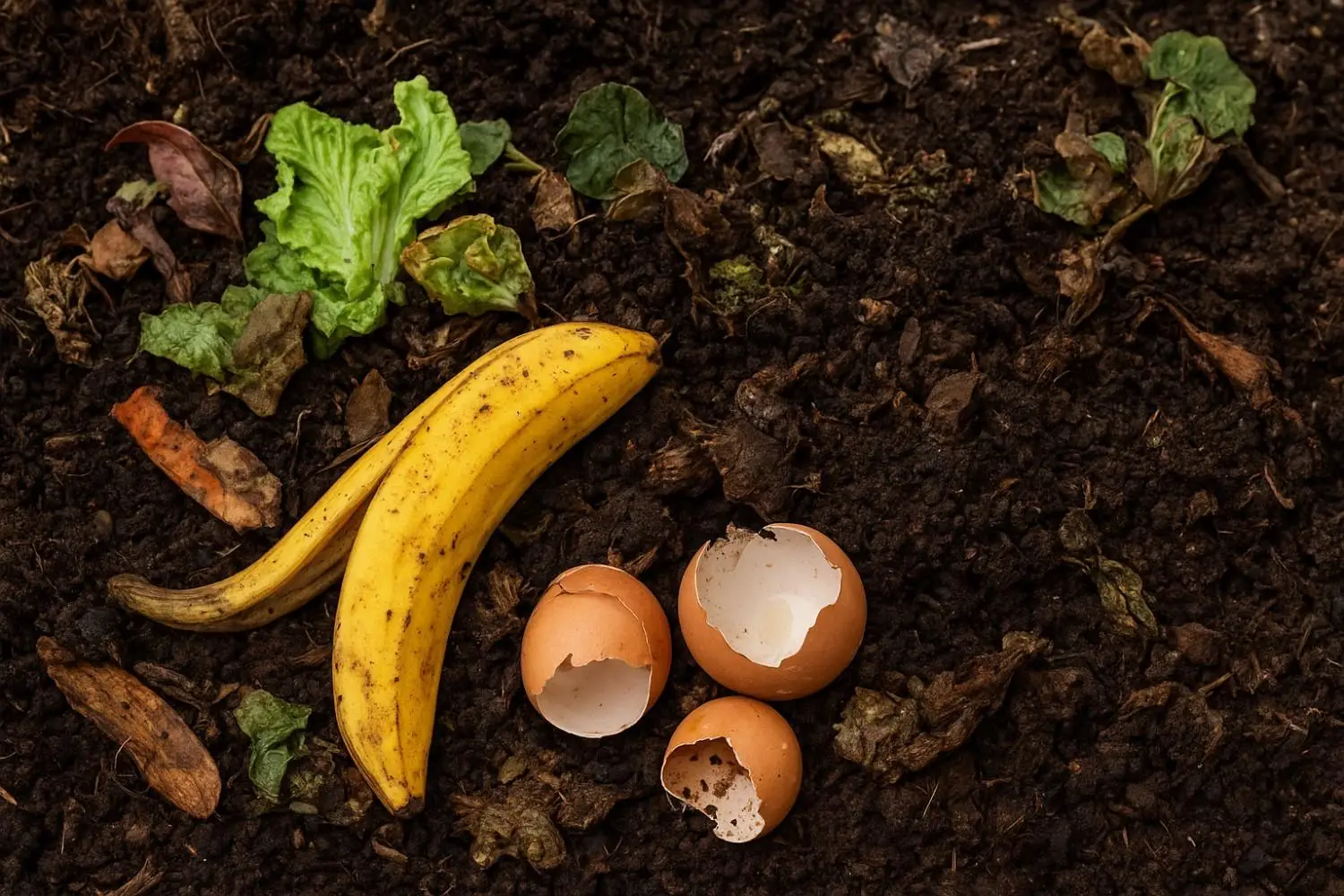
Introduction: Why Your Waste is a Treasure for Your Garden
Every banana peel, onion skin, grass clipping, or dry leaf you throw away could be food for your plants. Organic fertiliser made from kitchen and garden waste is not only cost-effective but also eco-friendly. It transforms everyday waste into nutrient-rich compost that improves soil health, boosts plant growth, and reduces landfill waste.
This guide takes you step-by-step through producing solid and liquid organic fertilisers using only natural materials—straight from your home.


Understanding Organic Fertiliser
What is Organic Fertiliser?
Organic fertilisers are plant and animal-based materials that add essential nutrients to the soil while improving its structure and microbial activity. Unlike synthetic fertilisers, they release nutrients slowly, feed soil life, and are safer for the environment.
Benefits over Synthetic Fertilisers:
- Soil Health: Improves texture, aeration, and water retention.
- Slow Nutrient Release: Prevents overfeeding and nutrient leaching.
- Safe & Eco-Friendly: No harmful chemicals; reduces pollution.
- Cost-Effective: Uses waste materials that cost nothing.
Ingredients You Can Use from Your Kitchen & Garden
Kitchen Waste:
- Banana peel – rich in potassium
- Onion & garlic peel – contain micronutrients
- Papaya & potato peel – high in carbohydrates for microbes
- Carrot peel & beetroot peel – adds minerals
- Eggshells – 93% calcium carbonate
- Used coffee grounds – adds nitrogen & acidity
- Tea leaves – rich in tannins and nitrogen
- Orange peel – natural pest repellent
Garden Waste:
- Dry leaves – improve structure & carbon content
- Grass clippings – high in nitrogen
- Weeds (seed-free) – compost material
- Neem leaves – natural pest repellent
- Discarded parts of harvested crops and vegetables
Step-by-Step: How to Make Solid Organic Fertiliser (Compost)
The Pot Pourri Fertiliser Method is a simple, odour-free composting process using layers.
Materials Needed:
- Terracotta pot with lid (10″ deep, 12″ diameter) with drainage hole
- Pebbles (for drainage)
- Kitchen and garden waste
- Partially decomposed compost (starter)
- Water
Process:
Step 1:
Place pebbles in the drainage hole to prevent clogging.
Step 2:
Add 1-inch layer of old compost—this introduces beneficial microbes to speed up decomposition.
Step 3:
Add a dry layer of dry leaves or grass clippings. This balances moisture and creates air pockets.
Step 4:
Add a wet layer of kitchen waste, like peels, coffee grounds, and eggshells.
Step 5:
Repeat dry and wet layers 3–4 times. For faster results, add a layer of partially decomposed compost in between.
Step 6:
Lightly sprinkle water to keep moisture levels like a squeezed sponge.
Step 7:
Cover with a lid, place a stone on top for pressure, and keep in a shaded, warm area.
Step 8:
Wait 30 days. Turn occasionally for aeration. Compost is ready when dark, crumbly, and earthy-smelling.
How to Make Liquid Organic Fertiliser (Compost Tea)
Liquid fertiliser works faster than solid compost, providing instant nutrients to plants.
Ingredients:
- Kitchen waste (banana peel, onion peel, tea leaves, etc.)
- Water
- Large bucket with lid
Method:
- Chop waste into small pieces.
- Fill bucket 2/3 with water and add waste.
- Cover and leave for 7–15 days, stirring every 2 days.
- Strain and dilute 1:10 with water before use.
Tip: Use banana peel water for potassium-loving plants like tomatoes and roses.
Advanced Organic Fertiliser Recipes from Your Waste
From your references, here are targeted fertiliser ideas:
| Fertilizer Type | Ingredients | Benefit |
| Calcium Boost | Crushed eggshells | Strengthens plant cell walls |
| Potassium Power | Buried banana peels | Improves flowering & fruiting |
| Nitrogen Shot | Grass clippings tea | Boosts leafy growth |
| Pest Control Fertiliser | Neem leaf compost | Repels soil pests |
Using Your Homemade Fertiliser
For Solid Compost:
- Vegetable beds: Mix into the top 2–3 inches of soil before planting.
- Potted plants: Add a handful every month.
- Fruit trees: Spread around drip line.
For Liquid Fertiliser:
- Foliar Spray: Mist diluted solution on leaves early morning.
- Soil Drench: Water plants directly at the base.
How Homemade Fertilisers are Better
Homemade fertiliser produces long shoot lengths and even longer roots than commercial fertiliser, and causes Soil Improvement with Better moisture retention and microbial activity.
Tips for Success
- Balance Green & Brown: Green = nitrogen-rich (wet waste), Brown = carbon-rich (dry waste).
- Avoid Meat & Dairy: Attracts pests and slows decomposition.
- Right Moisture: Too wet = smell; too dry = slow breakdown.
- Seasonal Advantage: Composting is faster in summer.
Environmental & Economic Benefits
By composting kitchen and garden waste:
- You reduce landfill waste.
- Cut fertiliser costs by up to 100%.
- Lower carbon footprint from reduced synthetic fertiliser use.
- Protect water bodies from chemical runoff.
Conclusion: Your Garden, Your Fertiliser
With simple steps and everyday waste, you can create powerful, eco-friendly fertilisers that rival store-bought ones—while keeping your garden chemical-free and sustainable.
Connect with Us
Wishing you a bountiful and prosperous Hydroponic kale harvest! For further assistance or any queries E-mail us, please feel free to reach out to your local agricultural experts @Agrigo 24/7
Reference
https://sageuniversity.edu.in/blogs/liquid-organic-fertilizers-from-kitchen-waste
https://www.researchgate.net/publication/337906293_Kitchen_Waste_Organic_Fertilizer_for_Gardens
https://www.researchgate.net/publication/388831472_Household_Compost_A_Sustainable_Way_of_Transforming_Kitchen_and_Garden_Waste_into_Organic_fertilizer_for_Residential_Garden
https://ijcrt.org/papers/IJCRT2306767.pdf
Leave a Reply